
Measured on 2026-11-07.
Baseline and change. The baseline is H3 as we use it today, with its own voice (way A). How our clips are made today; every other way is set against it.
The changes set against it:
- Omni with its own voice (way B)
- Omni given the LTX sound as an anchor (way C)
- Omni given the LTX sound as a reference sound (way D)
One video AI spoke our line clearly, and a second AI drew a clip to that sound. Where the voice was handed over, the mouth opened when the voice began. It is one picture, one line and one seed, so it is a first look, not a rate. The owner scored the handed-over voice higher than H3’s own, and we test more lines next.
What did we want to know?
Our video AI, MiniMax H3, draws a clip and gives it a voice of its own. Another model, LTX 2.5, can speak a line when we tell it the scene, who says it and how.
So we asked a plain question. If LTX speaks the line and H3 draws the clip to that sound, do the mouth and the sound agree better than with H3’s own voice?
How did we test it?
We used one picture, one line and one random seed. The line was: I told you not to open that door tonight.
First we asked LTX to speak the line, low and urgent, almost whispering, and we kept only its sound. Then we asked H3 to draw a clip in these ways.
Way A is H3 as we use it today, with its own voice. Way B is the faster H3, called Omni, with its own voice.
Way C is Omni given the LTX sound as an anchor at the very start of the clip. Way D is Omni given the LTX sound as a reference sound.
Did LTX speak the line?
Yes. A speech check on a computer processor heard exactly our line from the LTX sound, in both runs of the first step.
It is one line and one seed, so this is not a rate of how often it works.
Did the sound reach the clips?
Our speech check listened to the sound of every clip. In way A it dropped a word: it heard the door where the line says that door. In ways B, C and D it heard the line exactly.
In ways C and D, every word starts within 0.02 seconds of where it starts in the LTX sound. Both ways keep the LTX voice through whole.
| Way | Words missed (of line) | Starts on | Mouth by frame |
|---|---|---|---|
| A: H3 today | 0.1111 | wide shot | NNOOOOOCO??C |
| B: Omni, own voice | 0.0 | a close-up | OOOOOC?C?CCC |
| C: Omni, LTX anchor | 0.0 | a close-up | C?CCCOOOOOO? |
| D: Omni, LTX reference | 0.0 | a close-up | CCCCCOOOOOO? |
To share. Pictures of these numbers, made from the same record and sized for a phone:
Watch the clips
Here are the clips themselves, with the baseline first. Way A is how we make clips today, so every other way is set against it.
They are the full-size files as the farm made them. Each plays with its sound, so you can hear what the speech check heard.
The whole clip: one picture, one line, one seed
Baseline: H3 as we use it today, with its own voice (way A)
Change: Omni with its own voice (way B)
Change: Omni given the LTX sound as an anchor (way C)
Change: Omni given the LTX sound as a reference sound (way D)
Way A starts on a wide picture and cuts to a close-up. The other ways are close-ups from the first frame. In ways C and D the lips stay together until the LTX voice begins.
Did the mouth follow the sound?
We looked at frames spread along each clip and marked the mouth in each one. In ways C and D the lips stay together until about 1.8 seconds and open from then on. The LTX voice starts at 2.16 seconds.
So in the frames we looked at, the mouth follows the sound in ways C and D. In way B the mouth is already moving before its own sound starts.
Way A starts on the wide picture and cuts to a close-up. The other ways are close-ups from the first frame, because Omni uses the picture as a reference, not as a first frame.
The frames we looked at, one sheet for each way
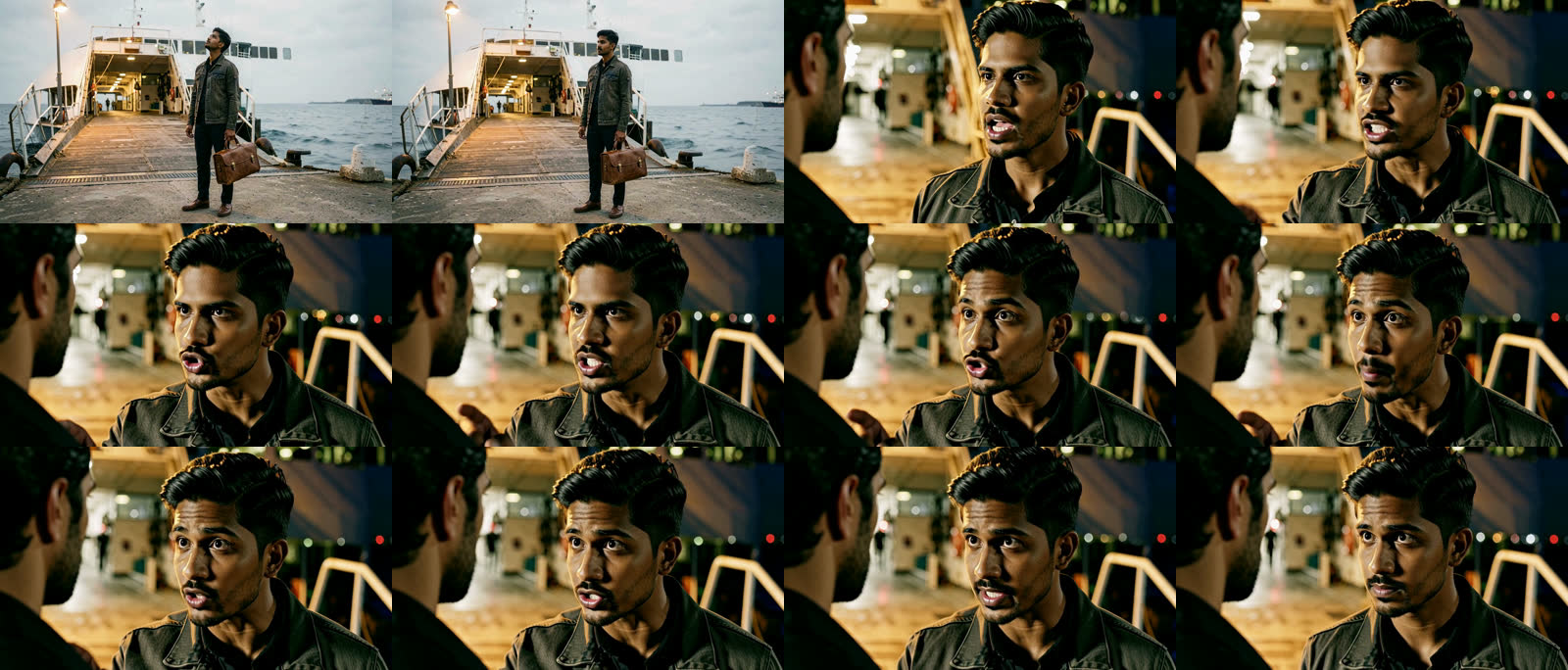
Way A. The clip starts wide and cuts to a close-up.
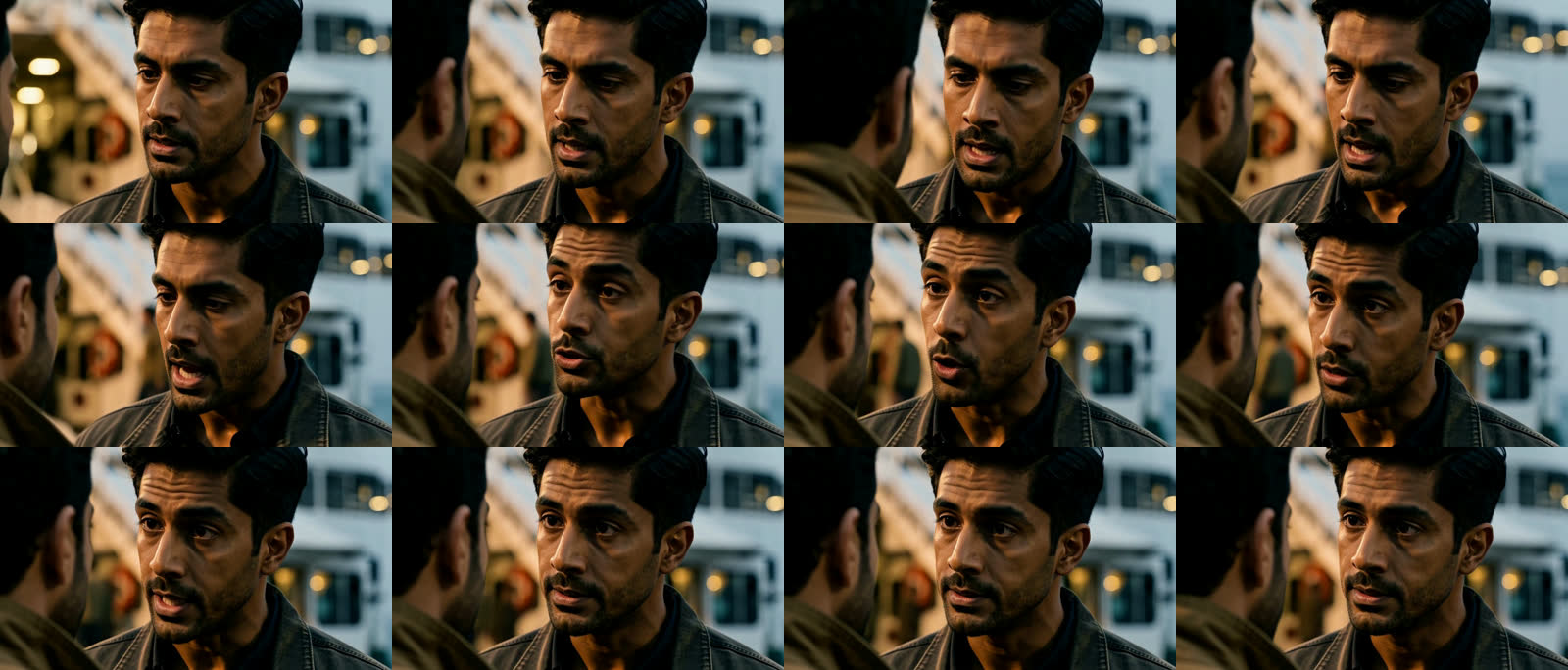
Way B. Close-ups from the first frame.
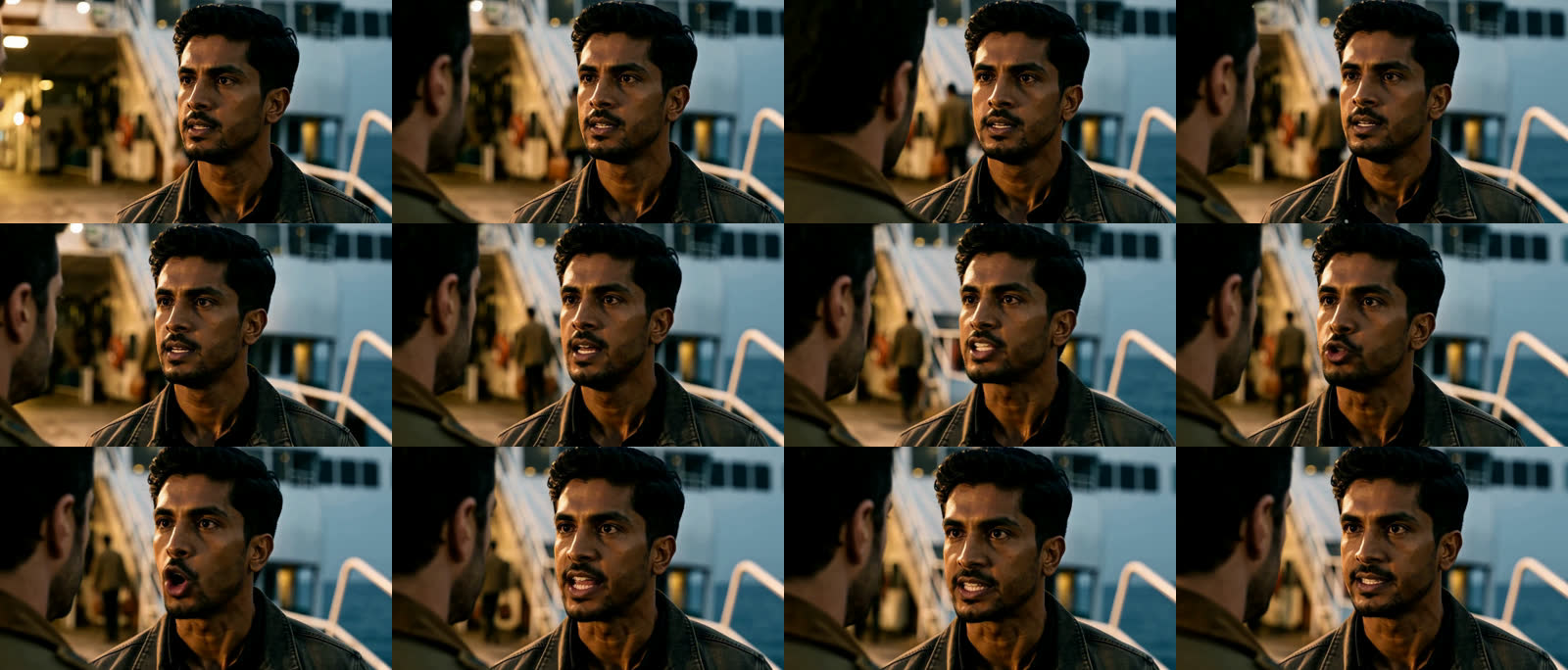
Way C. The lips stay together at first and open later.
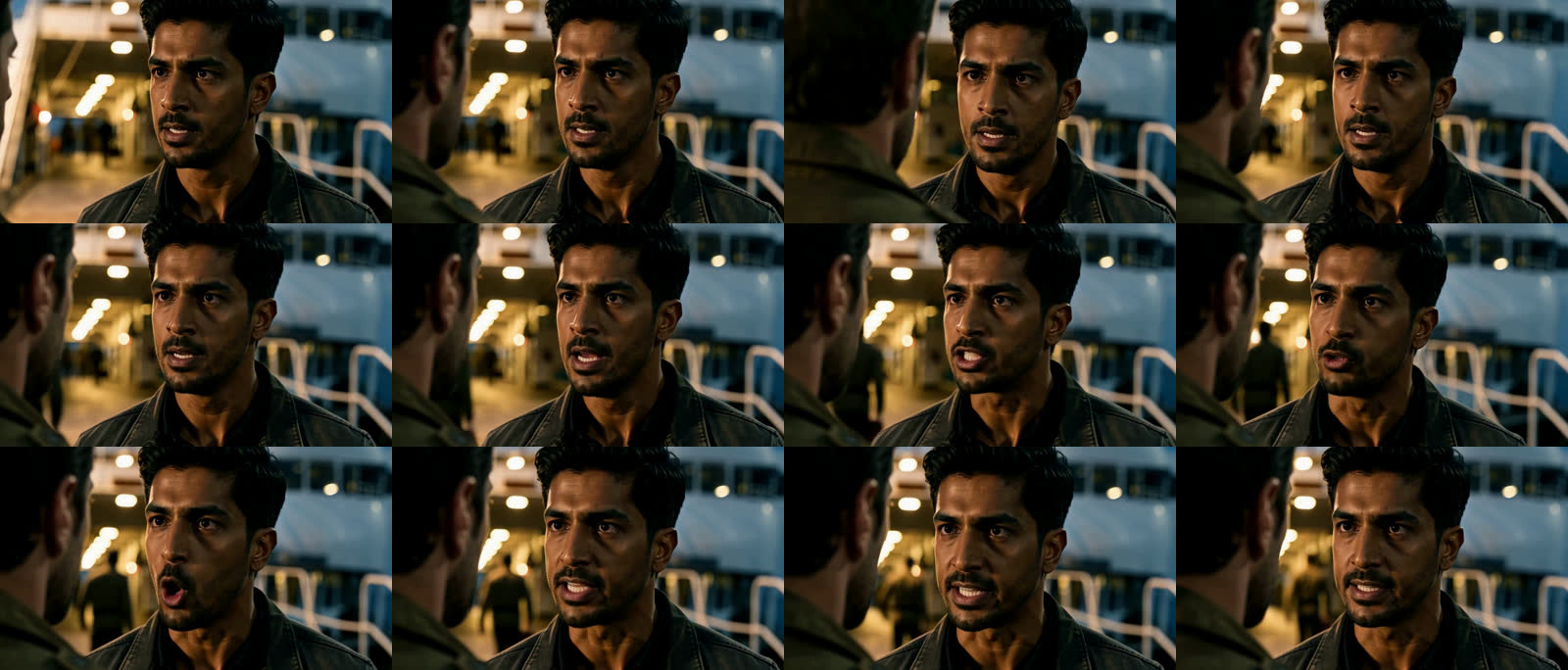
Way D. The lips stay together at first and open later.
The owner’s verdict
The owner watched the clips of all the ways and gave each a score out of ten. Way A, H3’s own voice, got six, and way B, Omni with its own voice, got seven.
Way C, Omni with the LTX sound as an anchor, got ten. Way D, Omni with the LTX sound as a reference, got nine. He found no expression in the man’s face in way A, and the best expression and the best sound in way C.
Ways C and D scored higher than H3’s own voice, and they are close to each other. That is one picture, one line and one person’s eye. It is not a blind comparison, and we have no lip-sync number we can trust.
Way C goes on to more pictures and more lines, to see whether the result holds.
What did not work?
We asked a picture-reading AI to judge the mouth in every frame. It failed our check twice. It cannot tell a closed mouth from an open one at this size, whatever we ask, so we quote no lip-sync number from it.
The LTX step also cut inside its own short clip, from a wide start to a close-up. We use only its sound, so this does not change the result. A cut inside a clip is a fault in a clip meant to be one shot, so we do not use that picture.
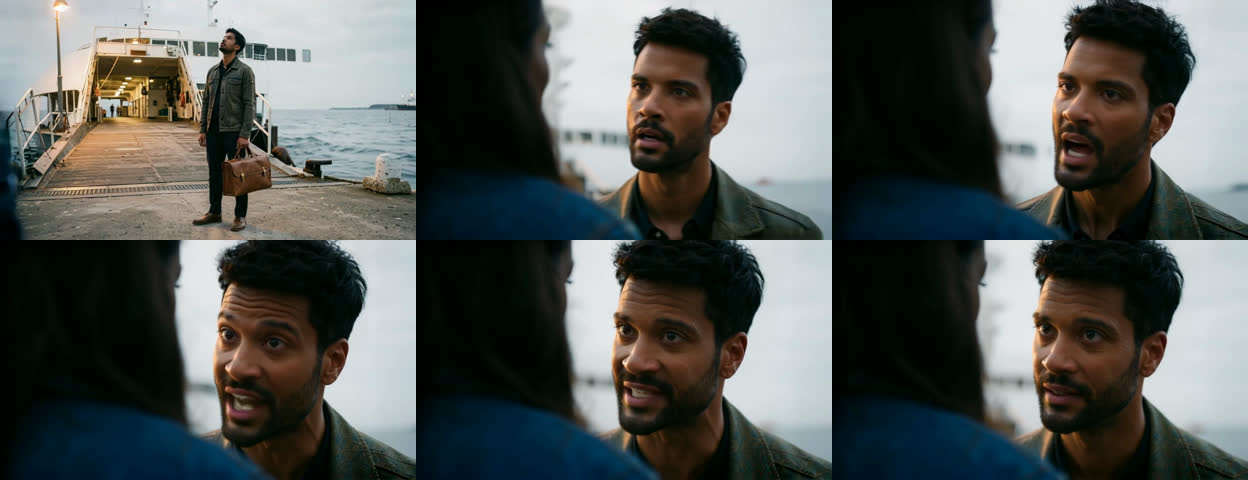
The LTX step’s own clip. The first frame is wide and the rest are close-ups.
The LTX step’s own clip, with its sound. It cuts from a wide start to a close-up. We use only its sound.
What did we not measure?
This is one picture, one line and one seed. It gives no rate of anything, and no way is ranked by speed: each way was one run on one card.
The faces differ a little between ways, and we did not measure that. We also have no lip-sync number we can trust. The next tool is a measure from face landmarks, and it is still to be built.
What does this mean?
The LTX voice can be handed to H3 and it carries through whole. In the frames we looked at, the mouth followed it in ways C and D. The owner scored ways C and D higher than H3’s own voice, by one person’s eye, and way C goes on to more lines.
Whether it beats H3’s own voice needs more pictures and a number we can trust.
Quick Search Our Blogs
Type in keywords and get instant access to related blog posts.


